

Artificial Intelligence has evolved rapidly over the last few years, with Large Language Models (LLMs) like ChatGPT, Gemini, Claude, and Llama transforming how businesses and individuals interact with technology. However, these AI systems are only as good as the data they are trained on.
One of the most important factors behind the success of modern AI models is Data Annotation. Combined with Reinforcement Learning from Human Feedback (RLHF), high-quality annotated datasets enable AI models to produce accurate, safe, and human-like responses.
In this guide, we’ll explain what RLHF is, why data annotation is critical, and how AI Data Annotation Services and AI Data Collection for Healthcare play a significant role in building intelligent AI systems.
What is RLHF?
RLHF (Reinforcement Learning from Human Feedback) is a machine learning technique used to improve AI models by incorporating human feedback into the training process.
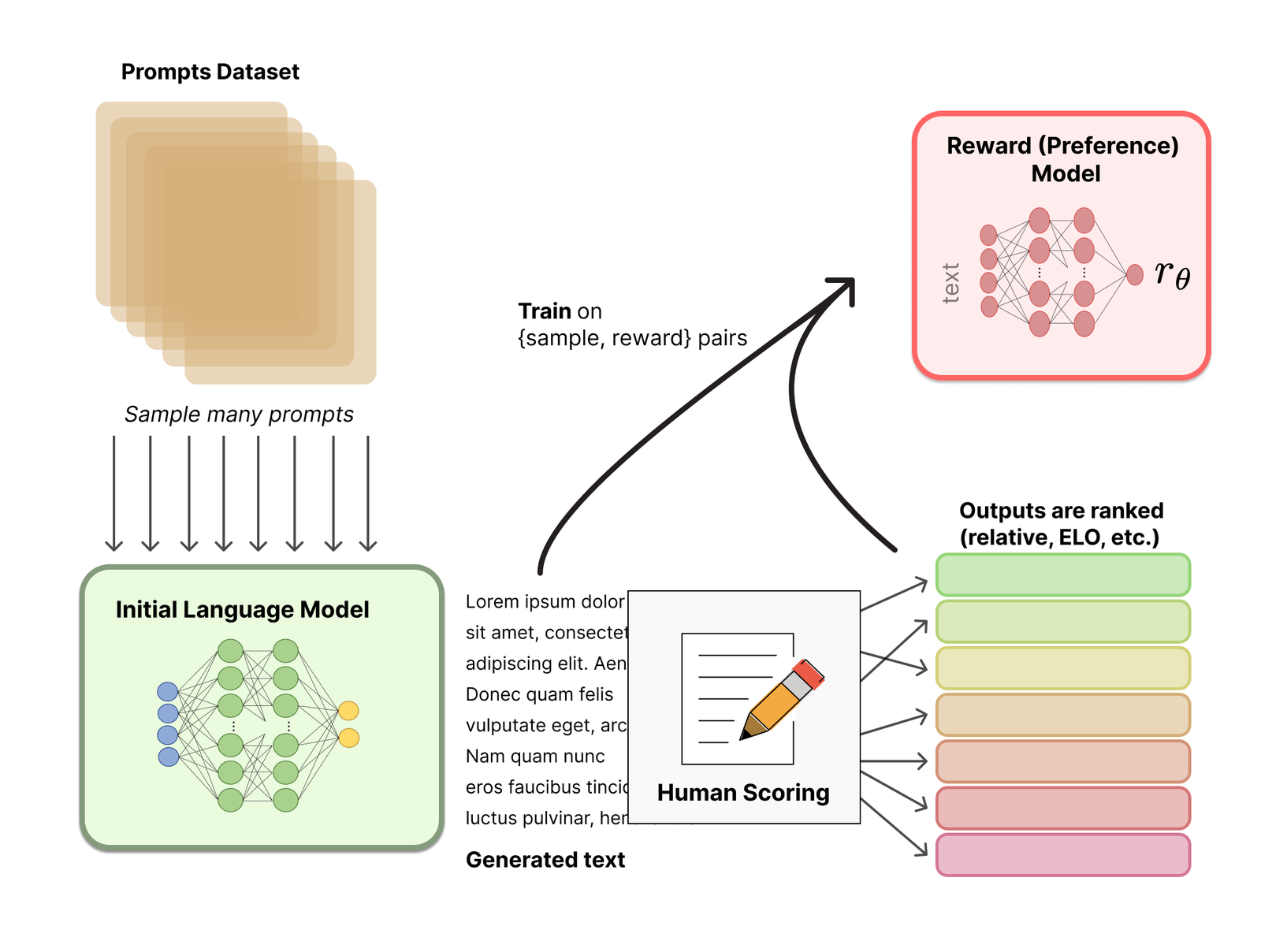
Instead of relying solely on raw internet data, AI models learn from human reviewers who evaluate responses, rank outputs, and provide corrections.
The process helps AI models:
- Produce more accurate answers
- Reduce hallucinations
- Improve reasoning capabilities
- Follow human preferences
- Generate safer and more reliable content
This approach has become a standard training method for modern Large Language Models.
How RLHF Works
The RLHF process typically involves four stages.
Data Collection
The first step is collecting diverse and high-quality datasets.
These datasets may include:
- Articles
- Conversations
- Medical documents
- Product descriptions
- Customer support chats
- Legal documents
- Images
- Audio
- Videos
This is where AI Data Collection for Healthcare and other industry-specific datasets become essential.
Data Annotation
Once the data is collected, professional annotators label and structure it.
Examples include:
- Named Entity Recognition (NER)
- Sentiment Annotation
- Intent Classification
- Image Bounding Boxes
- Semantic Segmentation
- Medical Image Annotation
- Text Classification
- Conversation Ranking
Without proper Data Annotation, AI models cannot understand context accurately.
Human Feedback
Human experts compare multiple AI-generated responses.
For example:
Prompt:
What are the symptoms of diabetes?
Response A may be incomplete.
Response B may provide medically verified information.
Human reviewers rank the better response.
The AI learns from these rankings.
Reinforcement Learning
The model updates itself based on human preferences.
Over time, the AI becomes:
- More helpful
- More factual
- Less biased
- Better aligned with user expectations
Why Data Annotation is Critical for LLMs
Modern LLMs require billions of examples.
However, raw data alone isn’t enough.
AI must understand:
- Context
- Intent
- Relationships
- Emotions
- Industry terminology
This understanding comes from Data Annotation.
Well-annotated datasets help AI distinguish between:
- Fact vs opinion
- Positive vs negative sentiment
- Medical symptoms vs diagnoses
- Product names vs brands
- Questions vs commands
Without annotation, AI would struggle to produce meaningful results.
Types of Data Annotation Used in AI
Text Annotation
Used in:
- Chatbots
- Search engines
- LLMs
- Customer support AI
Examples include:
- Entity Recognition
- Intent Detection
- Question Answering
- Toxicity Detection
Image Annotation
Commonly used in:
- Computer Vision
- Retail
- Manufacturing
- Autonomous Vehicles
Annotation methods include:
- Bounding Boxes
- Polygon Annotation
- Landmark Annotation
- Keypoint Annotation
Video Annotation
Used for:
- Traffic monitoring
- Sports analytics
- Security systems
- Retail behavior analysis
Audio Annotation
Essential for:
- Voice Assistants
- Speech Recognition
- Call Center AI
- Medical Dictation
Healthcare Data Annotation
Healthcare is one of the fastest-growing AI sectors.
Examples include:
- X-Ray Annotation
- MRI Annotation
- CT Scan Labeling
- Pathology Annotation
- Electronic Health Record (EHR) Annotation
- Clinical Text Annotation
High-quality AI Data Collection for Healthcare ensures medical AI systems can support diagnosis, treatment planning, and clinical research while maintaining data privacy and compliance.
Benefits of AI Data Annotation Services
Professional AI Data Annotation Services help organizations build accurate, scalable, and reliable AI models.
Key benefits include:
Higher Model Accuracy
Well-labeled data improves prediction quality and reduces errors.
Faster AI Development
Pre-annotated datasets accelerate model training and deployment.
Reduced Bias
Human reviewers identify and correct biased or misleading examples.
Better User Experience
Annotated datasets enable AI to generate more relevant and natural responses.
Industry-Specific Expertise
Specialized annotation teams understand domain-specific terminology for sectors such as healthcare, finance, legal, retail, and manufacturing.
Why Healthcare Requires High-Quality Data Annotation
Healthcare AI cannot rely on generic internet data.
Medical AI systems require:
- Expert-reviewed datasets
- Accurate clinical annotations
- Standardized terminology
- Privacy-compliant data handling
Examples include:
- Disease detection
- Tumor segmentation
- Drug discovery
- Medical chatbot training
- Clinical documentation automation
This is why AI Data Collection for Healthcare is a critical component of modern healthcare AI solutions.
Common Challenges in Data Annotation
Organizations often face challenges such as:
- Inconsistent labeling
- Poor data quality
- Annotator bias
- Large-scale dataset management
- Data security and privacy
- High annotation costs
- Complex medical and multilingual datasets
Choosing experienced annotation partners and implementing quality assurance processes can significantly improve outcomes.
Best Practices for High-Quality Data Annotation
To achieve the best AI performance:
- Define clear annotation guidelines.
- Use experienced, domain-specific annotators.
- Implement multi-level quality reviews.
- Maintain consistent labeling standards.
- Leverage AI-assisted annotation with human validation.
- Continuously update datasets as models evolve.
- Protect sensitive data through strong security and compliance practices.
The Future of RLHF and Data Annotation
As AI models become more sophisticated, Data Annotation will remain a foundational element of AI development.
Emerging trends include:
- AI-assisted annotation
- Human-in-the-loop workflows
- Multimodal data annotation
- Synthetic data generation
- Continuous RLHF optimization
- Domain-specific annotation for healthcare, finance, and legal AI
Despite automation advances, human expertise will continue to play a vital role in ensuring AI systems are accurate, ethical, and trustworthy.
Conclusion
Modern AI systems depend on more than massive datasets—they rely on high-quality Data Annotation and Reinforcement Learning from Human Feedback (RLHF) to understand language, context, and user intent.
Whether you’re building a chatbot, training a computer vision model, or developing healthcare AI, investing in professional AI Data Annotation Services and robust AI Data Collection for Healthcare processes is essential for creating reliable, scalable, and high-performing AI solutions.
As generative AI continues to evolve, organizations that prioritize quality annotation and human feedback will be better positioned to develop AI systems that users can trust.
Frequently Asked Questions (FAQs)
What is Data Annotation?
Data Annotation is the process of labeling raw data—such as text, images, audio, or video—so that AI and machine learning models can learn patterns and make accurate predictions.
What is RLHF in AI?
RLHF (Reinforcement Learning from Human Feedback) is a training method where human reviewers evaluate AI-generated responses and provide feedback to improve model accuracy, safety, and alignment with user expectations.
Why is Data Annotation important for Large Language Models?
Large Language Models require accurately labeled data to understand context, intent, relationships, and language nuances. High-quality annotation improves response quality and reduces errors.
What industries use AI Data Annotation Services?
AI Data Annotation Services are widely used in healthcare, finance, retail, automotive, e-commerce, manufacturing, agriculture, legal services, and customer support.
What is AI Data Collection for Healthcare?
AI Data Collection for Healthcare involves gathering and preparing medical datasets—such as clinical records, medical images, and diagnostic reports—for training AI systems used in diagnosis, treatment planning, and medical research.
How does RLHF improve AI models?
RLHF helps AI models learn from human preferences by ranking responses and reinforcing the most accurate, helpful, and safe outputs, resulting in more reliable AI behavior.
Can AI replace human data annotators?
AI can automate parts of the annotation process, but human experts remain essential for validating complex data, reducing bias, ensuring quality, and handling specialized domains like healthcare and legal AI.
How do I choose the right AI Data Annotation Services provider?
Look for a provider with industry expertise, strong quality assurance processes, scalable annotation capabilities, data security compliance, multilingual support, and experience with your specific AI use case.