

In an ever-evolving landscape of artificial intelligence (AI), several companies stand out as leaders, pushing innovation forward while pushing the limits of what can be accomplished with this technology. These companies are leading the charge in developing cutting-edge AI solutions that are revolutionizing industries, improving customer experiences and shaping our lives and working environments.
In this comprehensive guide, we’ll examine some of the leading AI companies paving the path towards artificial intelligence – including industry titans like Google, Amazon, IBM and Microsoft. We will highlight their advancements in machine learning, natural language processing, customer experiences and industry solutions as well as their impact on both AI ecosystem and broader economy.
Introduction Artificial intelligence has quickly become a ubiquitous presence in our lives, from virtual assistants to autonomous vehicles. Top AI companies play an essential role in driving innovation and shaping its future by capitalizing on their expertise, resources and technology to push back against what’s possible with artificial intelligence; creating breakthrough industries while revolutionizing customer experiences while opening up opportunities for growth and success.
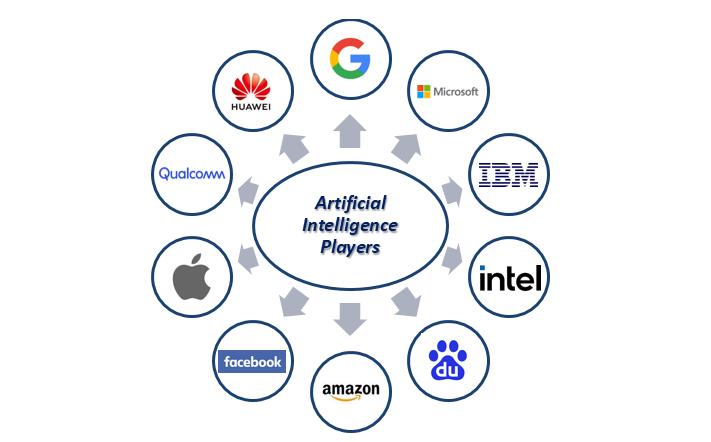
Industry Leaders: Companies Pioneering AI Innovation
Over time, several companies have emerged as industry leaders in artificial intelligence (AI), driving its evolution and shaping its future. Some of these top AI companies include:
Google Advancements in Machine Learning and Natural Language Processing
Google is an industry-leading innovator when it comes to artificial intelligence (AI). Their products and services utilize machine learning and natural language processing technologies for improved functionality and customer experiences. Among their notable AI initiatives:
Google AI Research: Google AI Research is dedicated to pioneering advances in artificial intelligence research through cutting-edge research and development efforts.
Google Cloud AI: Google Cloud provides a range of AI-powered services and solutions, such as machine learning APIs, AutoML tools and TensorFlow, an open-source machine learning framework.
Google Assistant: A virtual assistant powered by natural language processing and machine learning, enabling users to control devices and services with voice commands.
Amazon Leads in AI-Driven Customer Experiences
Amazon has long been at the forefront of AI-powered customer experiences, employing machine learning and data analytics to personalize recommendations, streamline operations, and enhance customer service. Their AI initiatives include:
Amazon Alexa: Alexa is Amazon’s virtual assistant powered by natural language understanding and machine learning algorithms, enabling users to complete tasks, control smart home devices and access information via voice-activated searches and voice command capabilities.
Amazon Web Services (AWS): AWS provides an impressive variety of AI and machine learning services, such as Amazon SageMaker for building, training and deploying machine learning models; as well as Amazon Rekognition which performs image and video analysis.
Amazon Go: Amazon Go is a cashier-less convenience store concept powered by computer vision, sensor fusion and machine learning algorithms to provide frictionless shopping experiences.
IBM Leads AI Innovation With Watson AI Platform
IBM is an innovator of artificial intelligence-powered enterprise solutions, featuring their Watson AI platform for healthcare, finance, manufacturing and retail industries. IBM AI initiatives include:
IBM Watson AI Platform: IBM Watson is an artificial intelligence (AI) platform offering services including natural language understanding, computer vision recognition and predictive analytics to assist businesses in extracting insights and making data-driven decisions.
IBM Watson Health: IBM Watson Health provides AI-powered solutions for healthcare providers, payers and life sciences organizations to enhance patient outcomes while decreasing costs and speeding research projects.
IBM Watson IoT: IBM Watson IoT uses AI and machine learning to process sensor data from connected devices and analyze it, optimizing operations, and providing predictive maintenance in industries such as manufacturing, transportation, and energy.
Microsoft: Innovations in Computer Vision and Speech Recognition
Microsoft is a pioneer in AI-powered technologies, pioneering groundbreaking innovations across computer vision, speech recognition, natural language understanding and more. Some of their initiatives in these areas include:
Azure AI: Microsoft Azure offers an expansive suite of AI services, including Azure Cognitive Services for computer vision, speech recognition and language understanding as well as Machine Learning which helps create, train and deploy machine learning models.
Microsoft Cortana: Cortana is Microsoft’s virtual assistant powered by artificial intelligence and natural language processing that enables users to manage tasks, set appointments, access information across devices and manage appointments more easily.
Microsoft Research: At Microsoft Research, their goal is to advance AI research through fundamental research in areas like deep learning, reinforcement learning and human-computer interactions.
Conclusion: Impact on AI
Overall, top AI companies such as Google, Amazon, IBM and Microsoft are driving innovation and shaping the future of artificial intelligence across industries and applications. Their investments in research and development, ethical AI principles commitments and customer value delivery efforts help push back boundaries of what can be accomplished with AI while creating economic and societal benefits. As AI evolves further these companies will play a pivotal role in shaping its development trajectory.
AI technology and its applications are driving innovation and increasing global adoption of AI-powered solutions. These top AI companies have made substantial advances in various areas of artificial intelligence, from improving machine learning algorithms to pioneering innovative applications in natural language processing, computer vision, and beyond.
Their efforts have not only transformed industries but have also enhanced everyday life for all, making AI more accessible, useful, and meaningful than ever before. As AI companies push the limits of innovation, their influence in the larger AI ecosystem only grows stronger. From virtual assistants and personalized recommendations to revolutionizing healthcare, finance, and transportation services – AI companies will shape our digital future further as their technologies and solutions continue to advance.
How AI Companies Are Transforming Industries Worldwide
Artificial intelligence is no longer limited to research labs or large tech corporations. Today, AI is transforming industries across the world by helping businesses automate processes, improve customer experiences, and make smarter decisions based on real-time data.
Leading AI companies are developing advanced solutions in areas such as healthcare, finance, cybersecurity, retail, education, logistics, and marketing. From intelligent chatbots and predictive analytics to autonomous systems and generative AI tools, these innovations are changing how businesses operate in the digital age.
As competition increases, companies investing in AI technologies are gaining a major advantage by improving efficiency, reducing operational costs, and delivering more personalized services.
Key Technologies Driving AI Innovation
The top AI companies are not just building tools they are creating technologies that shape the future of digital transformation.
Machine Learning
Machine learning allows systems to learn from data and improve over time without direct programming. It powers recommendation engines, fraud detection systems, and predictive analytics.
Natural Language Processing (NLP)
NLP helps machines understand and respond to human language. This technology is widely used in chatbots, virtual assistants, search engines, and AI writing tools.
Computer Vision
Computer vision enables machines to analyze and interpret images and videos. It is commonly used in facial recognition, medical imaging, surveillance systems, and autonomous vehicles.
Generative AI
Generative AI has become one of the fastest-growing AI sectors. Companies are developing AI systems capable of generating text, images, code, music, and videos with human-like creativity.
Robotics and Automation
AI-powered robotics are improving manufacturing, warehouse management, healthcare operations, and industrial automation.
Industries Benefiting the Most from AI
AI companies are creating solutions that impact almost every industry.
Healthcare
AI is helping doctors diagnose diseases faster, analyze medical images, and personalize treatment plans. AI-powered tools also support drug discovery and patient management systems.
Finance
Banks and financial institutions use AI for fraud detection, credit scoring, risk analysis, and automated customer support.
Retail and eCommerce
Retail businesses use AI to personalize recommendations, forecast demand, optimize pricing, and improve customer engagement.
Cybersecurity
AI helps detect threats, identify suspicious activity, and prevent cyberattacks in real time.
Transportation and Logistics
AI is improving route optimization, fleet management, autonomous driving systems, and supply chain operations.
What Makes a Leading AI Company Stand Out?
Not every company using AI becomes an industry leader. The top AI companies usually share several important qualities.
Strong Research and Development
Leading organizations invest heavily in AI research, innovation, and advanced model development.
Scalable AI Solutions
Successful AI companies build scalable products that can support businesses of all sizes across multiple industries.
Ethical AI Practices
As AI adoption grows, ethical concerns such as bias, privacy, and transparency are becoming increasingly important. Trusted AI companies focus on responsible AI development and data security.
Skilled AI Talent
The best AI companies attract experienced data scientists, machine learning engineers, and AI researchers to drive innovation.
Continuous Innovation
AI technology evolves rapidly. Companies that continuously improve their models and adapt to market changes remain ahead of the competition.
The Rise of Generative AI Startups
In recent years, generative AI startups have gained significant attention worldwide. These companies are developing tools capable of creating human-like text, realistic images, videos, and even software code.
Businesses are rapidly adopting generative AI for:
- Content creation
- Customer support automation
- Marketing campaigns
- Software development
- Data analysis
- Creative design
This growing demand is pushing AI companies to innovate faster and expand their AI capabilities across industries.
Challenges Facing AI Companies
Despite rapid growth, AI companies also face several major challenges.
Data Privacy and Security
AI systems rely heavily on large datasets, making data protection and compliance critical concerns.
High Development Costs
Building advanced AI models requires significant investment in infrastructure, talent, and computing resources.
AI Bias and Ethics
Poor-quality or biased training data can lead to unfair outcomes, making ethical AI development essential.
Regulatory Uncertainty
Governments around the world are introducing new AI regulations, requiring companies to adapt quickly.
Talent Shortage
The demand for experienced AI professionals continues to exceed supply, creating hiring challenges for many organizations.
Future of Artificial Intelligence Companies
The future of AI looks incredibly promising. Experts predict that AI will continue reshaping industries through automation, intelligent decision-making, and human-machine collaboration.
Future trends may include:
- More advanced generative AI models
- AI-powered personal assistants
- Autonomous business operations
- Human-like conversational AI
- AI-driven healthcare innovations
- Smarter cybersecurity systems
- Real-time predictive analytics
As AI technology evolves, companies that focus on innovation, ethical development, and scalable solutions will likely lead the next wave of digital transformation.
Final Thoughts
Artificial intelligence companies are playing a major role in shaping the future of technology and business. Their innovations are helping organizations automate operations, improve customer experiences, and unlock new growth opportunities across industries.
As AI adoption continues to accelerate globally, businesses that embrace AI-driven solutions will be better positioned to compete in an increasingly digital and data-driven world.