

In today’s data-driven business environment, companies rely heavily on accurate and timely data to gain a competitive advantage. Integrating Artificial Intelligence (AI) with Business Intelligence (BI) helps organizations automate data collection, improve analytics, and transform raw data into actionable insights. This integration enables faster decision-making, improved operational efficiency, and sustainable business growth.
What is AI Data Collection?
AI data collection refers to the use of advanced AI technologies such as machine learning, natural language processing, computer vision, and robotic process automation to gather, process, and organize data automatically from multiple sources.
Unlike traditional data collection methods, AI-powered systems can analyze large volumes of information in real time with greater accuracy and efficiency.
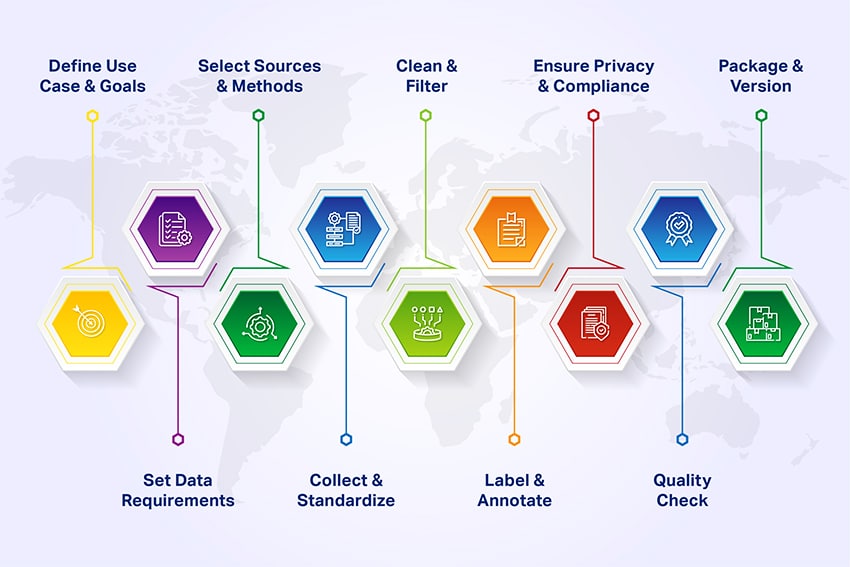
Key Components of AI Data Collection
Machine Learning (ML)
Machine learning algorithms analyze historical data to identify patterns, predict outcomes, and continuously improve data accuracy over time.
Natural Language Processing (NLP)
NLP helps extract valuable insights from unstructured text data such as emails, customer reviews, social media content, and reports.
Computer Vision
Computer vision technology enables AI systems to interpret images and videos, making it useful for surveillance, quality control, and visual analytics.
Robotic Process Automation (RPA)
RPA automates repetitive tasks such as web scraping, data entry, and report generation, reducing manual effort and improving productivity.
Understanding Business Intelligence (BI)
Business Intelligence (BI) includes technologies, applications, and processes used to collect, integrate, analyze, and present business data. The primary purpose of BI is to help organizations make smarter, data-driven decisions.
Key Components of Business Intelligence
Data Warehousing
Centralized systems that store data collected from various business sources for easy access and analysis.
Data Mining
The process of discovering hidden patterns, trends, and relationships within large datasets.
Dashboards and Reporting
BI dashboards visualize complex data using charts and reports, helping businesses monitor performance metrics effectively.
Advanced Analytics
Analytics tools help organizations identify trends, forecast outcomes, and make strategic decisions based on data insights.
Benefits of Integrating AI with Business Intelligence
Combining AI-driven data collection with BI platforms creates a powerful ecosystem for business growth and operational optimization.
Improved Data Accuracy
AI minimizes human errors during data collection and processing, resulting in cleaner and more reliable datasets for business analysis.
Real-Time Insights
AI systems can collect and process data instantly, enabling businesses to access real-time insights and respond quickly to market changes.
Increased Operational Efficiency
Automating repetitive data collection tasks frees employees to focus on strategic planning, customer engagement, and decision-making.
Comprehensive Data Analysis
AI can process structured and unstructured data from multiple sources, providing businesses with a more complete understanding of operations and customer behavior.
Predictive and Prescriptive Analytics
AI-powered BI systems can forecast future trends, predict customer behavior, and recommend actions to improve business outcomes.
Challenges of AI and BI Integration
Although integrating AI with BI offers significant advantages, businesses may face several challenges during implementation.
Data Integration Complexity
Combining data from multiple platforms and systems can be technically challenging and requires strong integration frameworks.
Data Privacy and Security
Organizations must ensure that customer and business data remains secure and compliant with privacy regulations.
Lack of Technical Expertise
Successful implementation requires professionals skilled in both AI and BI technologies.
Scalability Issues
As data volumes increase, businesses need scalable infrastructure to maintain performance and efficiency.
Best Practices for Successful AI and BI Integration
Define Clear Business Objectives
Start by identifying the specific business goals and problems the integration aims to solve.
Choose Compatible Tools
Select AI and BI platforms that integrate seamlessly and support future scalability.
Ensure High Data Quality
Regularly clean, validate, and audit data to maintain accuracy and reliability.
Implement Strong Data Governance
Establish policies for data privacy, compliance, security, and access management.
Invest in Employee Training
Provide teams with proper training to maximize the effectiveness of AI and BI tools.
Continuously Monitor and Optimize
Track system performance regularly and refine processes to improve business outcomes.
Real-World Applications of AI and BI Integration
Healthcare
Healthcare providers use AI and BI for patient monitoring, disease prediction, and personalized treatment planning.
Finance
Financial institutions leverage AI-driven BI systems to detect fraud, assess risks, and improve customer experiences.
Retail
Retail businesses use AI and BI to analyze customer behavior, optimize inventory management, and personalize marketing campaigns.
Manufacturing
Manufacturers utilize AI-powered BI for predictive maintenance, supply chain optimization, and production monitoring.
Telecommunications
Telecom companies analyze customer usage patterns and network performance to improve services and develop new offerings.
Conclusion
Integrating AI data collection with Business Intelligence is transforming how businesses gather insights, make decisions, and improve operational efficiency. AI data collection enhances data accuracy, automates workflows, and delivers real-time analytics, while BI converts this data into meaningful business intelligence.
Organizations that successfully combine AI and BI can unlock deeper insights, improve customer experiences, optimize operations, and stay competitive in an increasingly data-driven world. As technology continues to evolve, AI and BI integration will become essential for businesses seeking long-term growth and innovation.
FAQs
What is AI data collection?
AI data collection is the process of using artificial intelligence technologies to automatically gather, process, and analyze data from multiple sources.
How does AI improve Business Intelligence?
AI improves BI by automating data collection, enhancing data accuracy, providing real-time insights, and enabling predictive analytics.
What are the benefits of integrating AI with BI?
The main benefits include improved efficiency, better decision-making, real-time analytics, predictive insights, and enhanced data accuracy.
Which industries use AI and BI integration?
Industries such as healthcare, finance, retail, manufacturing, and telecommunications widely use AI and BI integration.
What are the major challenges of AI and BI integration?
Common challenges include data security concerns, integration complexity, scalability issues, and the need for technical expertise.
Why is real-time data important in Business Intelligence?
Real-time data allows businesses to respond quickly to market changes, customer behavior, and operational issues, improving decision-making speed.
What role does machine learning play in AI data collection?
Machine learning helps identify patterns, predict outcomes, and continuously improve the accuracy of collected data.
Is AI and BI integration suitable for small businesses?
Yes, small businesses can also benefit from AI and BI integration by improving efficiency, customer insights, and strategic planning.
How can businesses ensure data security during AI integration?
Businesses should implement strong encryption, access controls, compliance policies, and regular security audits.
What is the future of AI and Business Intelligence?
The future of AI and BI involves advanced automation, deeper predictive analytics, personalized experiences, and smarter decision-making systems.